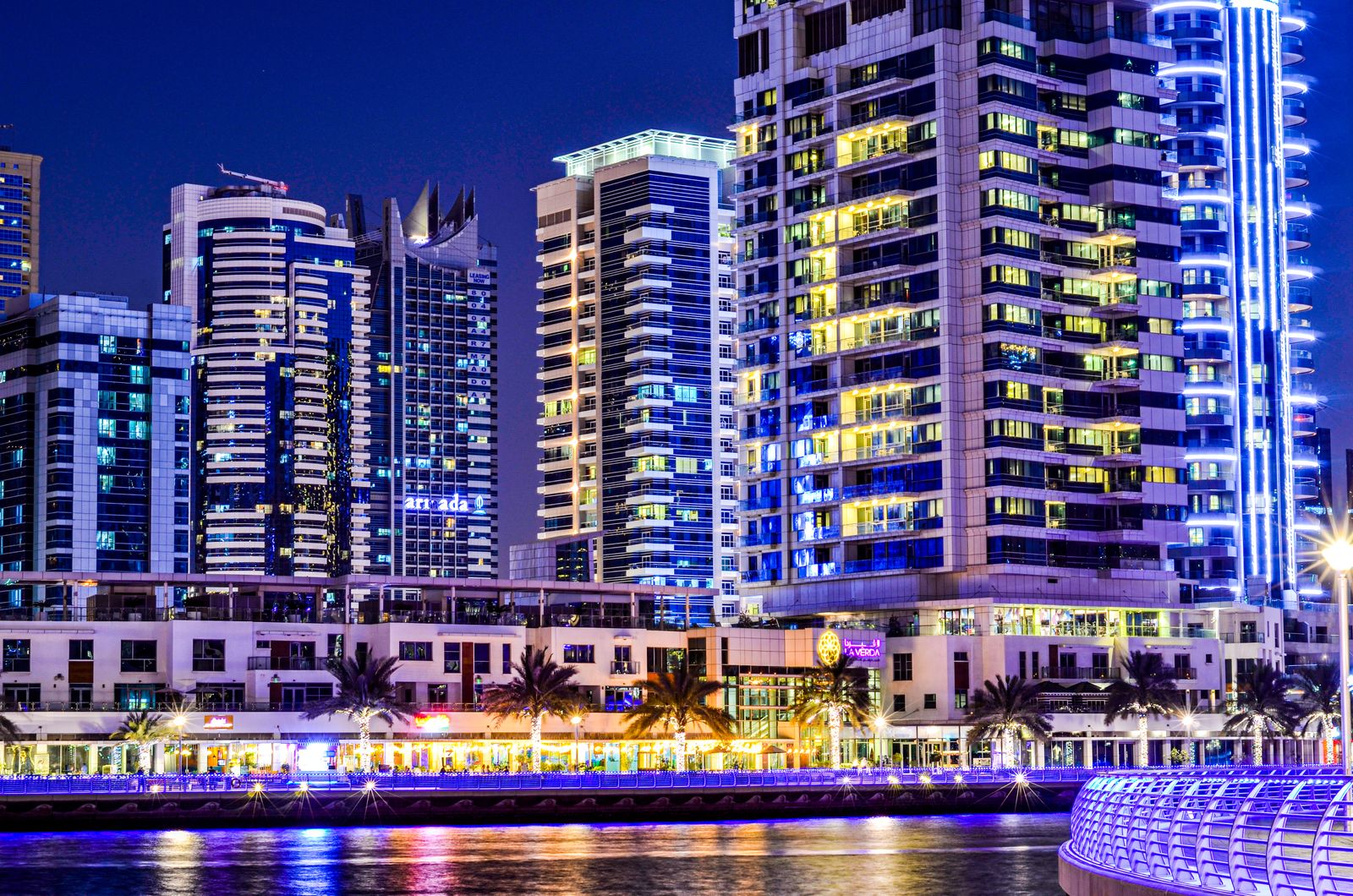
The development: residency support moves to the sales floor
The most concrete piece of news in this pack is operational rather than legislative. According to Arabian Business, Dubai Holding Real Estate has launched a dedicated Golden Visa and investor-residency facilitation service at the Meraas and Nakheel sales centre. In plain terms, the paperwork that used to sit apart from the buying process is being folded into the point of sale, so an investor can line up a qualifying purchase and the associated residency application in one place.
That is a modest but telling signal. Developers do not build concierge desks for processes that generate little demand. The move confirms that residency-through-property is now a core part of how Dubai sells to international buyers, and that the emirate wants to remove friction from a step that historically involved separate visits, agents and waiting.
How the property route to residency actually works
The residency framework operates on two tiers. As reported by Techbullion, an investment of AED 2 million or more qualifies for a 10-year renewable Golden Visa, while a property worth AED 750,000 secures a two-year residency visa. Critically, both allow the holder to sponsor a spouse, children and parents without needing a local sponsor.
For a relocating family or an investor who wants optionality on where they live and bank, that sponsorship right is often more valuable than the headline visa itself. It converts a property purchase into a family relocation platform. The AED 2 million Golden Visa, being renewable and long-dated, is the tier that carries genuine planning weight; the AED 750,000 two-year visa is a lighter-touch entry point tied to a smaller commitment.
Techbullion also notes the well-established tax position that makes the wrapper attractive: no tax on rental income, no capital gains tax on sale, no annual property tax and no inheritance tax, alongside freehold ownership for foreigners in designated areas. None of that is new, but it is the backdrop against which the residency incentive works.
The market it sits within
The facilitation service arrives into a market with real transactional depth. Techbullion, citing market data, reports 16,959 property transactions worth AED 60.6 billion in February 2026, an 18% increase year-on-year. The same piece points to more than 197,263 deals worth over AED 624 billion between January and November 2025, and states residential prices have risen roughly 60% since 2022.
Those figures should be read with a clear caveat, which I set out in the flags: they appear within a promotional article published by a brokerage, and while the transaction totals are consistent with Dubai Land Department reporting, several of the yield and appreciation claims in that same source are self-serving and should not be taken at face value. The direction of travel — high volumes, strong off-plan participation — is credible; the more spectacular percentage claims are not something I would underwrite.
Why the residency angle matters commercially
The practical value of a smoother visa process is that it widens the buyer pool. A purchaser who can settle property and residency in a single engagement is more likely to commit, and is more likely to be an end-user or long-term holder rather than a pure flipper. That, over time, supports a healthier owner-occupier base in the communities where qualifying stock sits.
It also nudges buyers towards the AED 2 million band, because that is where the durable, renewable residency lives. For investors, the discipline is to make sure the property earns its place on fundamentals — location, developer track record, rental demand, exit liquidity — and to treat the visa as a bonus that comes with a good asset, not a justification for a weak one.
The developer landscape behind the launch
The service is being delivered through Meraas and Nakheel, both part of Dubai Holding Real Estate. Nakheel is a long-standing master-developer; Construction Week's GCC developer ranking historically placed it among the region's largest, and it is behind large master-plans such as the Dubai Islands scheme. For an investor, buying into a government-linked master-developer's inventory carries a different delivery-risk profile than buying from a small private launch — generally lower, though never zero, and always worth verifying project-by-project.
The bottom line
This is a convenience upgrade to an existing incentive, not a change in the rules. The thresholds, the tax treatment and the sponsorship rights are unchanged. What has changed is that the residency step is now being packaged alongside the sale, which will make the property-plus-residency proposition easier to execute and, therefore, easier to sell. Investors should welcome the efficiency while keeping the analytical order right: buy the asset first, collect the visa second.
I like efficiency, and putting residency support on the sales floor is genuinely useful for overseas buyers who dread the paperwork. But I want to be blunt about the risk it creates: when a visa is dangled at the point of sale, it becomes easy to talk yourself into a marginal property just to clear a threshold. I have seen people stretch to AED 2 million on stock they would never have bought otherwise, purely for the Golden Visa. Reverse that logic. Find an asset you would own with no visa attached — right location, credible developer, real rental demand, a clean exit — and if it happens to qualify you for residency, treat that as a free option. The visa should never be the thesis. It is the garnish on a decision the fundamentals have already justified.
What this means for investors
If residency is part of your goal, the AED 2 million tier is the one that matters, because it is renewable and long-dated and lets you sponsor family without a local sponsor. Structure your purchase so the property stands on its own numbers first — yield, developer delivery record, community demand — then confirm it clears the visa threshold. The new facilitation desk should shorten the process, but do your own due diligence on the specific project rather than relying on the sales centre's framing. Keep the tax position in view: no rental-income, capital-gains, annual-property or inheritance tax materially improves net returns versus London or New York. Verify current thresholds and procedures directly with DLD or a licensed conveyancer before committing, as incentive terms can change.
- The headline transaction, yield and price-growth figures come largely from a brokerage's promotional article and should be independently verified before use.
- Visa thresholds and eligibility rules can change; always confirm current terms with the Dubai Land Department or a licensed adviser.
- Buying to hit a visa threshold rather than on fundamentals is a common and costly error.
- The developer ranking cited dates from 2022 and may not reflect current standings.
- A residency incentive does not offset delivery risk on any individual off-plan project.
If a Golden Visa is part of your plan, message me on WhatsApp or book a consultation — I'll help you buy an asset worth owning first, and treat the visa as the bonus it should be.
Not ready for a call? Start with the Investor Diagnostic.
Material claims in this analysis are linked to their underlying sources.
- Dubai reveals new Golden Visa service — Arabian Business · 3 weeks ago
- Own a Dubai Property for Just $1,250/Month — Here's Why Global Investors Are Rushing to Buy in Dubai — Techbullion · Apr 14, 2026
- Who are the top 50 developers in the GCC? — Constructionweekonline · Oct 13, 2022
Figures are drawn from the sources above and were accurate as of 8 August 2026. This is market commentary, not personal financial advice.