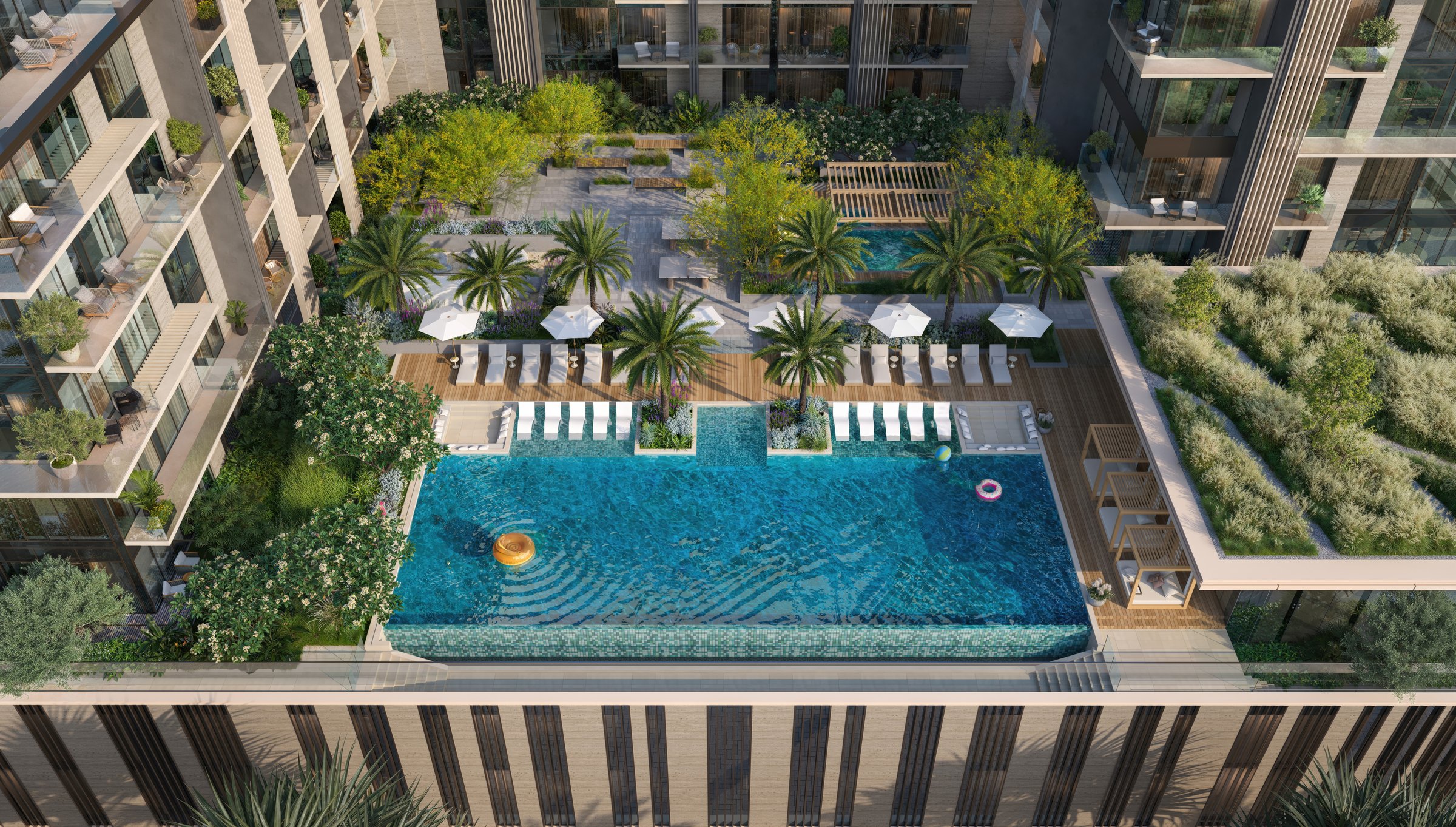
The headline development
Dubai's largest listed developer is going bigger. According to Gulf Business, Emaar Properties is preparing to unveil a new master-planned community in the emirate with an estimated value of Dhs200bn — roughly $54.5bn — designed to house around 150,000 residents. Reported in the past fortnight, the plan represents one of the most ambitious single masterplans Emaar has floated, and it arrives while the broader Dubai market continues to absorb record volumes of new supply.
A project of this magnitude is worth reading carefully, because Emaar is not a speculative player. It built and delivered Downtown Dubai, Dubai Marina and Dubai Hills Estate, and its track record on handover and community management is the benchmark other developers are measured against. When a master developer of that standing commits to a community for 150,000 people, it is a statement about where it expects long-run population and demand to sit.
Why the scale matters
A 150,000-resident community is effectively a new city district rather than a single tower or cluster. Numbers like this only make commercial sense against a backdrop of sustained population growth and inward migration — the demand engine that has driven Dubai's residential market over recent years. Emaar's willingness to underwrite Dhs200bn of development is, in itself, a signal of confidence in that trajectory.
For investors, master-planned communities carry a specific profile. The upside is that a single developer controls the roads, retail, schools, parks and phasing, which historically supports both liveability and resale liquidity in Emaar's flagship communities. The trade-off is time and phasing risk: early phases can offer the best entry price but the least amenity, while later phases sell into a more mature — and usually more expensive — environment.
The wider developer picture
Emaar's move does not sit in isolation. Reuters/Zawya reports that Azizi Developments maintained its top position in Dubai's real estate market, leading on both sales value and volume in June 2026. That tells us the volume end of the market — typically more affordable, faster-moving stock — is still absorbing units at pace.
So the market has two things happening at once: a master developer committing enormous long-term capital to a premium, planned community, and a high-volume developer topping the sales charts month to month. Both point to demand, but they serve different investor strategies. Emaar's masterplan is a long-horizon, brand-led play; Azizi's leadership reflects strong turnover in the higher-velocity segment.
Elsewhere in the ecosystem, developers are leaning into sustainability and quality-of-life differentiators. Gulf Business reports that Dubai Holding Community Management has partnered with ReFarm Global on a 'Sea to Soil' initiative on Palm Jumeirah, aiming to divert more than 20 tonnes of algae waste from disposal by the end of 2026 and convert it into regenerative soil for landscaping. Individually a small programme, it reflects a broader theme: community management and environmental credentials are becoming part of how large developers compete for buyers, not just an afterthought.
What is confirmed — and what isn't
It is important to be precise about what the source pack actually establishes. Gulf Business confirms the estimated value (Dhs200bn / $54.5bn) and the 150,000-resident target. What it does not yet give is a confirmed location, a launch date for sales, unit pricing, payment-plan structures or a phasing schedule. Those are precisely the variables that determine whether an early buyer captures value or simply pays a premium for a brand and a masterplan render.
That matters because mega-launches attract intense early demand. In hot phases, the launch premium can already price in years of expected growth. The discipline for an investor is to separate the quality of the developer — which here is not in question — from the quality of the specific deal on offer, which cannot be judged until pricing and terms are public.
Reading the supply signal
A new district for 150,000 residents adds materially to Dubai's medium-term supply pipeline. For existing owners in nearby communities, large new masterplans can compete for the same tenant and buyer pool over time; for buyers, they can reset the amenity and price benchmarks of a whole corridor. Neither is inherently good or bad — it depends on where you buy, at what price, and how the delivery is phased against the rest of the market's completions.
The constructive read is that Emaar's commitment reinforces the structural demand story that has underpinned Dubai's performance. The disciplined read is that supply of this scale is a reason to be more selective, not less — to favour locations with genuine infrastructure and demand support, and to be wary of paying full launch pricing on speculative assumptions.
An Emaar masterplan of this scale is a genuine confidence signal — you don't underwrite Dhs200bn and 150,000 residents unless you believe the demand is structural. That's reassuring for the Dubai thesis broadly. But I'd caution against confusing a great developer with a great deal. Until we see the location, pricing, payment plan and phasing, this is a headline, not an investment. Emaar's flagship communities have historically delivered on liquidity and quality, which is exactly why launch demand tends to be fierce and early premiums can be steep. My approach on any mega-launch is the same: buy the right phase at the right price, or wait. I want infrastructure and end-user demand doing the heavy lifting on future value — not a render and a brand name.
What this means for investors
For investors, the practical takeaway is patience with intent. Register interest, but treat the current information as incomplete: there is no confirmed price, plan or phase to underwrite yet. When details land, run the numbers on a specific unit — entry price per square foot versus comparable Emaar communities, the payment-plan structure, and realistic rental demand for the phase you're buying. Azizi's June sales leadership shows the volume market is still moving, so this isn't a market crying out for stimulus. That argues for selectivity: favour early phases only where the discount to later pricing is real, and avoid paying a full launch premium that already banks years of growth. Scale like this also expands medium-term supply, so exit timing and location quality matter more than ever.
- No confirmed location, pricing, payment plan or launch date has been published, so the investment case cannot yet be assessed.
- Mega-launch demand can inflate early pricing, pricing in years of expected growth before delivery.
- A 150,000-resident district adds materially to medium-term supply, which can pressure rents and resale in competing communities.
- Phasing risk means early buyers may hold units for years before amenities and community maturity arrive.
- Any advertising of this specific project would require a Trakheesi permit and confirmed developer details.
If you're weighing a Dubai off-plan buy, book a consultation or message me on WhatsApp — I'll run the same developer and deal checks on your shortlist before you commit.
Not ready for a call? Start with the Investor Diagnostic.
Material claims in this analysis are linked to their underlying sources.
- Emaar to unveil $54bn Dubai mega project designed for 150,000 residents — Gulf Business · 2 weeks ago
- Azizi maintains top rank among property developers in Dubai — Reuters / Zawya · 2026-07-08
- Dubai Holding to turn sea waste into soil on Palm Jumeirah — Gulf Business · 24 June 2026
Figures are drawn from the sources above and were accurate as of 8 August 2026. This is market commentary, not personal financial advice.