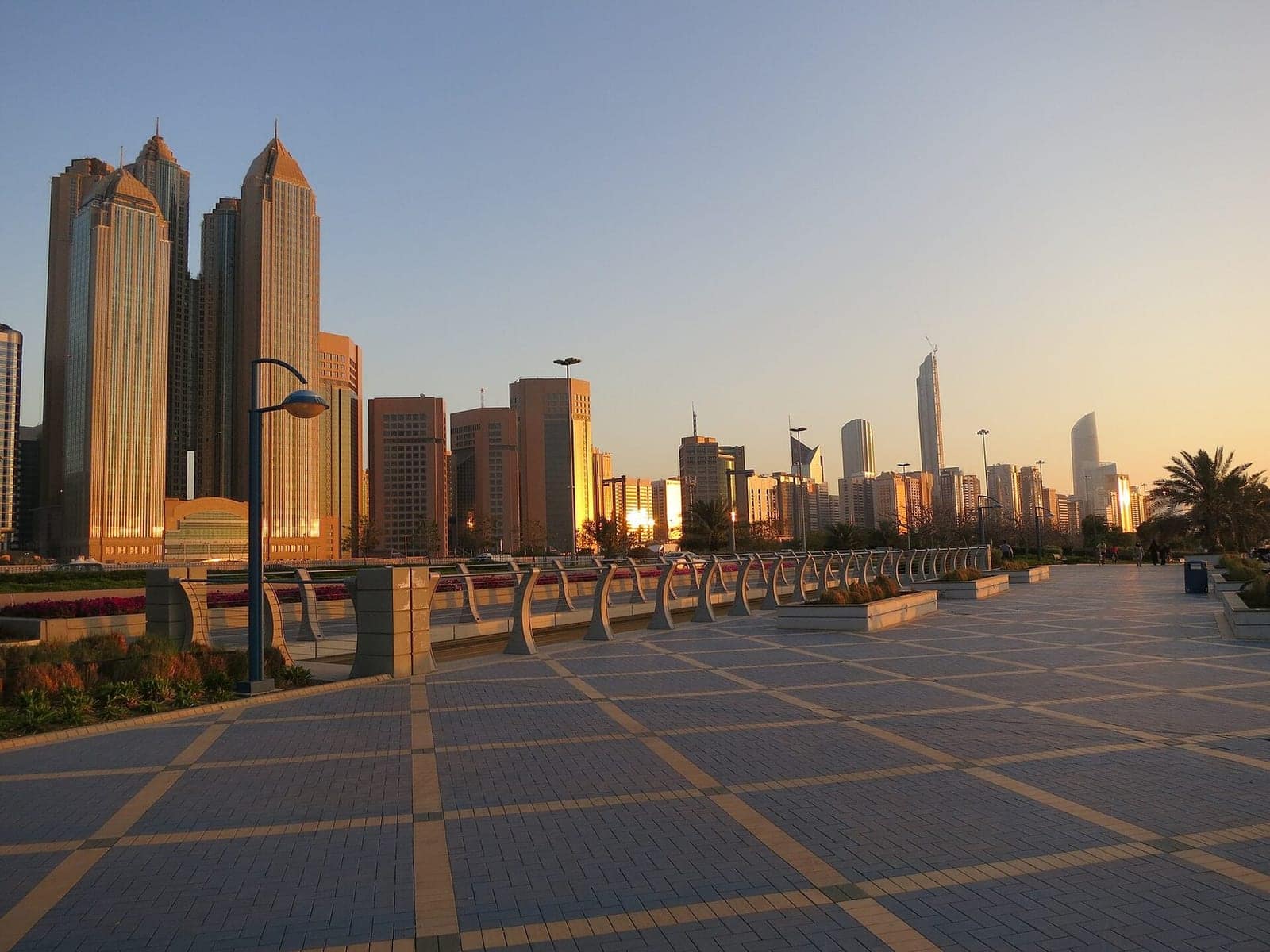
Why investors are looking at Abu Dhabi now
For years, Abu Dhabi sat quietly in Dubai's shadow. That is changing. The capital of the UAE holds the vast majority of the country's oil reserves and controls some of the largest sovereign wealth funds on earth, and it is now deploying that capital into a deliberate, long-horizon property story. For an investor, the appeal is not noise or hype. It is stability — a market that moves more slowly, prices more conservatively, and is underwritten by state-level planning rather than speculative momentum.
The other shift is access. Abu Dhabi opened designated investment zones where foreign buyers can own freehold. That legal clarity, combined with residency pathways and a genuinely low-tax environment, is what has moved the capital from “interesting” to “investable” for international money. The question is no longer whether you can buy. It is whether you should — and where.
The macro investment case
Abu Dhabi's strongest feature is supply discipline. The market is not flooded the way parts of Dubai have been in past cycles. Development is concentrated, master-planned, and released in measured phases, which tends to protect pricing and reduce the risk of an oversupply correction in the better locations. That restraint is a feature, not a limitation.
Behind it sits the sovereign-wealth backdrop. When the same state apparatus funding infrastructure, culture, education, and healthcare is also standing behind the master developer, the fundamentals become more durable and less sentiment-driven. I evaluate every market through the same lens:
- Supply and demand — is stock controlled, or is the pipeline about to overwhelm the buyer?
- Infrastructure trajectory — is the state actively building around the asset?
- Exit liquidity — who buys this from you, and how quickly, when you want out?
- Rental demand — a stable, high-income tenant base, or a thin one?
Abu Dhabi scores well on the first three. The full guide sets out how each island performs against all of them.
The islands that matter
Abu Dhabi is best understood island by island, because each one is built for a different job. Saadiyat is the cultural and prime lifestyle address — the Louvre, upcoming museums, beachfront — and tends to attract end-users and capital-preservation buyers. Yas is entertainment-led — the circuit, theme parks, leisure — with a stronger short-let and lifestyle-rental angle. Al Reem is the denser, more urban, more accessible entry point, where yield and tenant demand often look most attractive. Al Maryah is the financial and commercial core. Hudayriyat is the newer, more speculative growth story.
The trade-off is consistent: the prestige islands lean towards capital growth and preservation, the urban ones lean towards yield, and the emerging ones carry higher upside with higher risk. The full guide maps the current per-square-foot and yield figures island by island, so you can match the zone to your actual objective rather than the marketing.
Abu Dhabi vs Dubai
This is the decision most investors are really trying to make. Directionally, Abu Dhabi tends to offer a lower, more controlled entry and a steadier, more institutional tenant profile — government, energy, and family-office money rather than fast-moving expat churn. Dubai tends to offer more velocity, deeper liquidity, and a larger, more transient rental pool. Neither is simply “better”. They reward different temperaments.
If your priority is pace, liquidity, and resale volume, Dubai usually wins. If your priority is stability, supply-protected pricing, and a slower compounding hold, Abu Dhabi earns a serious look. The guide puts the two side by side on entry price, yield, and transaction dynamics so the comparison is grounded in numbers, not opinion.
Judging the developer
The property is only one part of the investment. In Abu Dhabi, the developer decides the outcome more than the postcode does. Aldar functions as the capital's master developer — state-aligned, track-recorded across delivery, and the reason much of the market holds together. That matters, because a strong master developer protects handover timelines, community quality, and the resale value of every unit around yours.
My due-diligence lens does not change across borders: delivery history, build quality, financial strength, and how their earlier communities held value on the secondary market. In the full guide I profile the active developers with confidence grades — because a good-looking brochure and a genuinely strong investment are not the same thing, and the difference is almost always the name behind it.
Who Abu Dhabi suits — and who is better served by Dubai
Abu Dhabi suits the investor who values stability over speed: someone building a long-term, capital-preservation-led position, comfortable with a slower market and a more measured exit. It suits family capital, and buyers who want state-backed fundamentals under their asset.
It is a weaker fit for the investor who needs high transaction velocity, rapid off-plan flips, or the deepest possible resale pool — that profile is usually better served by Dubai. I would rather tell you the capital is the wrong market for your strategy than watch you buy into the wrong one. The honest answer depends on your horizon, your yield target, and your appetite for pace. The full guide is built to help you make that call with the actual figures in front of you.